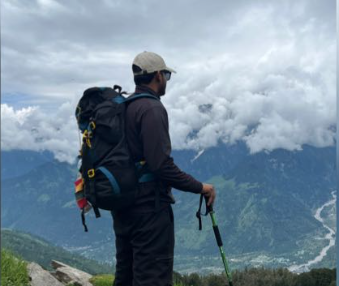

⚡ Kheerganga Trek Factsheet
- Altitude: 2,960 meters (9,711 feet) in Parvati Valley, Himachal Pradesh.
- Trek Distance: Approx 12 to 14 kilometers (one way) from the Barshaini roadhead.
- Trek Grade: Easy to Moderate; ideal for first-time Himalayan trekkers with basic fitness.
- Highlight: Natural geothermal sulfur hot spring pool (Parvati Kund) facing snow-capped peaks.
- Best Months: April to June (blooming flora) and September to November (crisp golden skies).
Perched high above the turbulent, turquoise waters of the Parvati River in Himachal Pradesh, Kheerganga is celebrated as one of the most iconic beginner treks in the Indian Himalayas. Local mythology holds that Lord Shiva meditated here for thousands of years, and that the churning white waters of the natural spring were originally a river of sweet rice milk (kheer) bestowed by Lord Kartikeya.
Today, the reward awaiting trekkers at the summit meadow is truly magical: stepping into a natural, steaming geothermal sulfur spring pool to soothe sore muscles while gazing across sheer pine-clad valleys at the snow-crowned peaks of the Pin Parvati range. Having guided novice hikers up this trail for over a decade, we have assembled this comprehensive, field-tested handbook to help you conquer the Kheerganga trail safely and independently.
Choosing Your Trailhead: Nakthan vs. Kalga Route
The trek officially commences from the village of Barshaini, the last motorable roadhead in Parvati Valley (located 14 km beyond Manikaran). From the Barshaini bridge where the Parvati and Tosh rivers converge, you have two distinct trail options:
Route 1: Via Nakthan Village (The Conventional Scenic Trail)
- Distance: Approx 12 kilometers (5 to 6 hours hiking time).
- Trail Character: The path traverses along the sunny left bank of the Parvati River, passing through apple orchards and the traditional wooden village of Nakthan.
- Midpoint Highlight: Rudranag Temple and its sacred twin waterfalls. Enjoy hot ginger tea and Maggi noodles at riverside wooden shacks.
- Verdict: Best for first-timers who enjoy regular tea stops, village photography, and a clearly marked footpath.
Route 2: Via Kalga & Pulga (The Enchanted Forest Trail)
- Distance: Approx 14 kilometers (5.5 to 7 hours hiking time).
- Trail Character: Ascends steeply from the Barshaini dam site through the mystical cedar forest of Kalga (known locally as the Fairy Forest). The trail remains shaded by towering deodars and is substantially quieter, with fewer trekkers.
- Strategy: Ascend via Nakthan and descend via Kalga to experience the full ecological diversity of Parvati Valley in a circular loop!
Trail Breakdown: Section-by-Section Terrain Guide
| Trail Section | Distance | Difficulty | Terrain Highlights |
|---|---|---|---|
| Barshaini to Nakthan | 3.5 km | Gentle ascent | Paved village paths, terraced apple orchards |
| Nakthan to Rudranag | 2.0 km | Moderate | Rocky trails, river roar, Rudranag waterfall bridge |
| Rudranag to Mid-Forest Dhaba | 3.0 km | Steep climb | Dense pine roots, muddy switches, wooden footbridges |
| Mid-Forest to Kheerganga Meadow | 3.5 km | Moderate – Gentle | Opening alpine pastures, shepherd huts, sulfur scent |
The Crux: The Climb Beyond Rudranag
The most demanding segment begins immediately after crossing the wooden footbridge over the roaring Parvati River past Rudranag. Here, the trail enters dense, shaded pine forest and ascends steeply over exposed tree roots and rocky steps for roughly 2.5 kilometers. Take measured, rhythmic steps, breathe deeply through your nose, and stay hydrated with small, regular sips of water.
The Summit Reward: Parvati Kund Hot Springs
Upon breaking out of the tree line onto the wide, undulating alpine meadow of Kheerganga (altitude 2,960 meters), follow the sulfur steam rising towards the hillside temple of Lord Shiva. The natural hot springs are channeled into two separate stone bathing pools:
- Men's Pool: An open-air stone pool with sweeping 360-degree vistas of the snow-clad peaks.
- Women's Pool: Fully enclosed inside a private, high-walled wooden bathhouse with natural light for complete privacy.
- Healing Minerals: The water emerges naturally at a therapeutic 38°C to 42°C (100°F to 108°F), rich in sulfur and minerals that completely relieve physical exhaustion.
Where to Stay: Campsites & Alpine Huts
Following high-court environmental conservation orders, permanent concrete construction is banned on Kheerganga meadow. Accommodations consist of semi-permanent alpine tents, geodesic domes, and cozy wooden shepherd huts:
- Budget Alpine Tents: Standard 2-person tents equipped with foam sleeping mats, thick thermal sleeping bags, and heavy fleece blankets cost between ₹600 and ₹1,200 ($7 to $15 USD) per night.
- Communal Cafe Huts: Large traditional wooden dhabas with sawdust-burning iron heating stoves (bukhari) in the center, where you can socialize, play acoustic guitar, and sleep on cushioned communal mattresses.
- Dining: Dhabas serve hearty mountain meals: dal chawal, hot parathas, Israeli shakshuka, herbal lemon-ginger-honey teas, and pancakes.
Bonus Side Excursions: Tosh & Manikaran Sahib
Make the most of your journey to Parvati Valley by pairing Kheerganga with two exceptional cultural destinations located right at the Barshaini roadhead:
- Tosh Village: Perched on a high ridge 3 kilometers above Barshaini, Tosh is a traditional Himachali timber village overlooking massive glaciers. Walk through wooden lanes where village elders spin sheep wool on drop spindles, and relax in bohemian cafes serving apple pie.
- Manikaran Sahib Gurdwara: Located 14 kilometers downstream along the Parvati River, this historic Sikh pilgrimage site is famous for its natural boiling geothermal springs, so hot that rice and lentils for the community Langar kitchen are cooked in pots suspended directly in the bubbling spring water!
Beginner Packing Checklist
Never overload your backpack on a mountain trail. Keep your pack weight under 7 to 8 kilograms:
- Footwear: Broken-in trekking shoes with deep lugged rubber soles (Vibram or Contagrip) for traction on wet mud and loose pine needles.
- Clothing: Moisture-wicking synthetic t-shirts (avoid pure cotton, which stays cold and wet with sweat), quick-dry trekking pants, a lightweight fleece pullover, and a compact down jacket for freezing meadow nights.
- Weather Protection: A lightweight rain poncho or waterproof jacket (mountain showers can occur unexpectedly even in summer).
- Gear: A single trekking pole (drastically reduces stress on knee joints during the steep downhill descent), headlamp with extra batteries, a reusable 1-liter water bottle, and a quick-drying microfiber towel for the hot springs.
Ready to tackle even grander high-altitude Himalayan wilderness? Venture into our comprehensive guide on The Ultimate Guide to Spiti Valley: Surviving the Cold Desert.


